

Key Takeaways
- Personal care support is shaped around your daily routine, not a one-size-fits-all checklist.
- Medication support in personal care helps reduce missed doses and adds peace of mind.
- Personal care sits between independent living and skilled nursing, offering hands-on help without a clinical feel.
- A warm, connected community plays a real role in your overall well-being.
- A personalized well-being assessment helps map out the right level of support for you.
Medication Safety and the Power of Personal Care
Keeping up with medications on your own can feel like a part-time job. Between managing multiple prescriptions, timing doses correctly, and tracking refills, it’s easy for even the most organized person to feel overwhelmed. That’s not a flaw—it’s just a lot to manage solo.
Personal care in senior living can take that weight off your shoulders by weaving medication support right into your daily routine, naturally, personally, and without disrupting the life you love. It’s not about handing control over to someone else. It’s about having a steady, attentive presence that helps things run smoothly so you can focus on what actually matters.
What Personal Care Really Looks Like
Forget the image of someone in a white coat clicking through a clipboard. Personal care looks like a familiar face, knowing your morning coffee comes before anything else. It’s support that fits around your rhythm, not the other way around.
At its core, personal care is built on 1 idea: every person is different. Your preferences, your schedule, your quirks—they all shape how support shows up for you. That might mean help with bathing or grooming, gentle reminders throughout the day, or just someone nearby when you need a hand. The approach is lifestyle-first, comfort-forward, and always centered on you.
Medication Support That Fits Your Life
What the Team Helps With
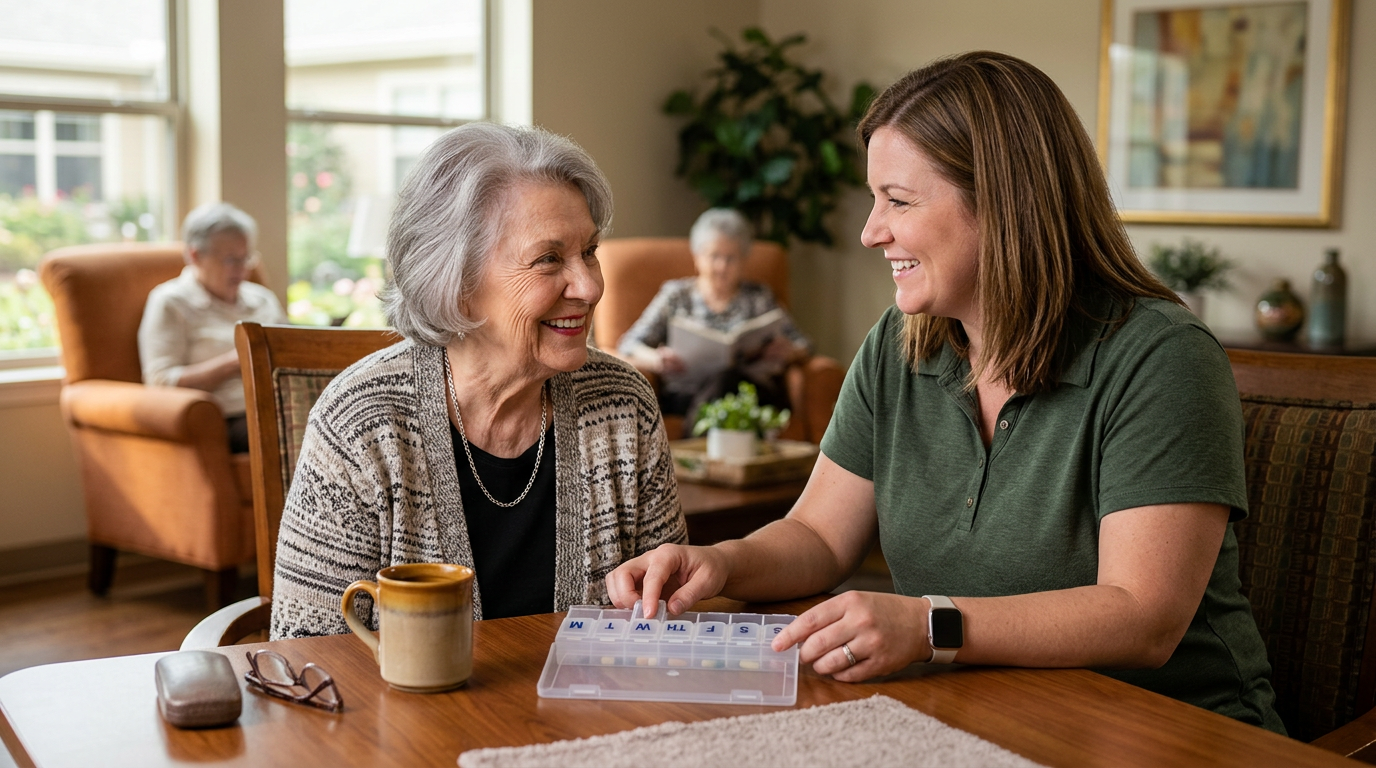
The care team takes time to understand your specific schedule and works medication reminders right into your day. Whether you take something with breakfast or right before bed, those reminders are timed to match how you actually live. That kind of attentiveness means nothing slips through the cracks.
Beyond reminders, the team stays attuned to your individual patterns. If something seems off or a dose was missed, they notice, and they respond. It’s the kind of watchful care that’s hard to replicate when you’re going it alone. Learning more about activities of daily living can help you better understand where consistent support makes the biggest difference.
Why It Matters in Personal Care vs. Going It Alone
Managing medications at home without support can mean missed doses, mix-ups, or simply forgetting in the middle of a busy day. Those small slips can add up. In a personal care setting, consistent support helps keep your routine on track day after day.
There’s also the peace of mind factor for you and for family members who worry from a distance. Knowing someone attentive is nearby doesn’t just help with medications. It changes the whole tone of your day.

The Social Side of Senior Living and Your Well-Being
Here’s something that doesn’t get talked about enough: connection is good for you. When you have people around who actually know your name, your favorite show, and the story behind that photo on your shelf, something shifts. Your days feel fuller. Your mood lifts.
A close-knit community adds a layer of support that no medication schedule can replicate. Neighbors who check in, team members who remember what makes you laugh, shared meals and activities that give the day a satisfying shape—these things matter more than most people expect when they first start exploring senior living options.
Staying socially connected has real, lasting benefits for your overall health. And the enrichment and engagement programs at Juniper Village at Meadville are designed to make that connection a natural part of every day.
How Personal Care Differs from Other Senior Living Options
Personal Care vs. Independent Living
Independent living is a great fit for those who want a vibrant community with minimal day-to-day assistance. Personal care adds a bit more hands-on support, like help with daily tasks, medication reminders, and a team that checks in regularly.
Importantly, personal care doesn’t trade away your freedom. You still make your own choices, keep your own schedule, and live your own way. The support simply fills in where it’s helpful. You can explore what’s typically included in personal care to get a clearer picture of what day-to-day life can look like.
Personal Care vs. Skilled Nursing
Skilled nursing tends to be more clinically intensive, designed for those who need medical monitoring and hands-on health management around the clock. Personal care is a step back from that and is less clinical, more lifestyle-centered, and focused on helping you thrive in everyday life.
Think of it as right-sized support. Not too much, not too little—just what fits where you are right now.
Finding the Right Fit for You or Your Loved One
You might be in the right place for personal care if daily tasks have started to feel like a bigger lift than they used to be, or if managing medications alone has become stressful. Maybe you’re craving more connection and structure in your day. These are all meaningful signs worth paying attention to.
Some good questions to ask when exploring your options include: What does a typical day look like? How is care personalized? How does the team handle medication support?
At Juniper Village at Meadville, every new community member receives a personalized well-being assessment that answers exactly these kinds of questions—so your path forward reflects who you are, not just what you need.
Reach out today to start the conversation. Your next chapter is waiting. Let’s shape it together.